
Growth is exciting. But as your business grows, your organisational structure can quietly become a problem.
Someone gets promoted. A new department is added. Responsibilities move around. New people join. Someone leaves, and their work gets divided between others.
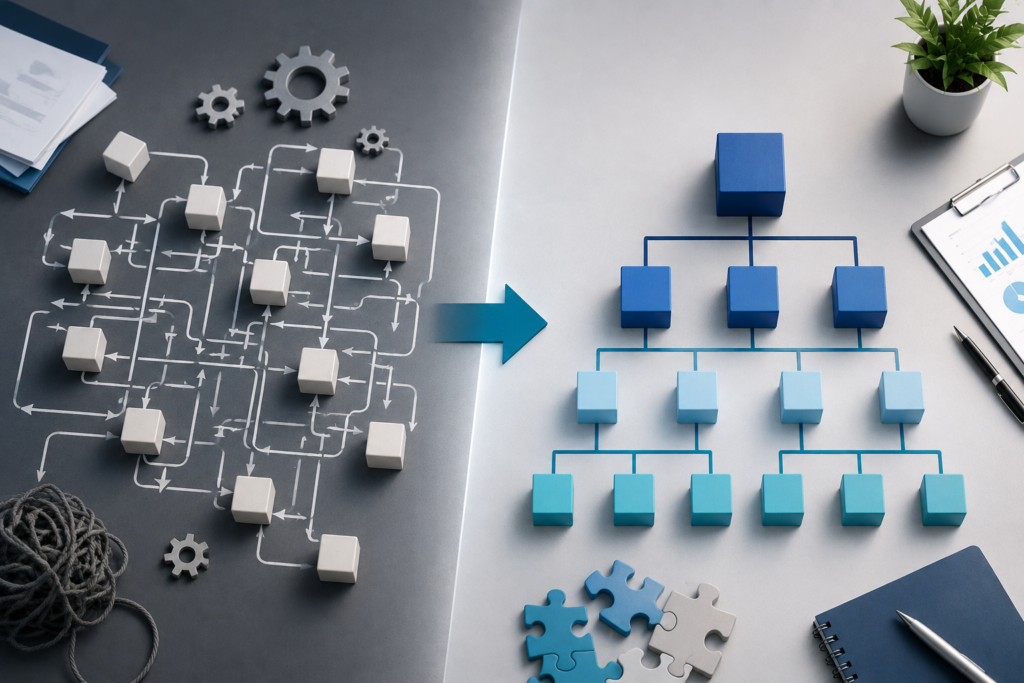
Before long, your organisation chart may still look perfectly fine — but the way your business actually operates doesn’t.
Decisions take too long. Responsibilities overlap. Managers become bottlenecks. Senior employees spend time on work that could be delegated. Different teams duplicate the same tasks. And suddenly, everyone seems busy, but the business isn’t moving as quickly as it should.
The answer isn’t always “We need more people.”
Sometimes, you need a better structure.
Start by asking: Who owns each decision? Where does work get stuck? Are responsibilities clear? Are managers spending their time where they add the most value? Are you recruiting because you genuinely need more capacity — or because your existing structure isn’t working efficiently?
Your organisational structure should support where your business is going, not simply reflect how it operated three years ago.
And organisational design isn’t automatically about cutting jobs. It can mean clearer responsibilities, better delegation, stronger leadership accountability, fewer unnecessary layers, improved career paths and smarter use of technology.
Your organisation chart is more than a collection of boxes. It should be a blueprint for how your business succeeds.
If your business has grown faster than its structure, it may be time to rethink how your people, roles and responsibilities fit together.
Before you add more headcount, make sure you’re making the best use of the capability you already have.
#HRConsultancy #OrganisationalDesign #OrganisationStructure #HRStrategy #BusinessGrowth #PeopleStrategy #WorkforcePlanning #Leadership #Management #JobDesign #BusinessStrategy #HRAdvice #SMEs #PeopleManagement #OrganisationalDevelopment